Why UK Laboratories Choose Independently Tested Research Peptides
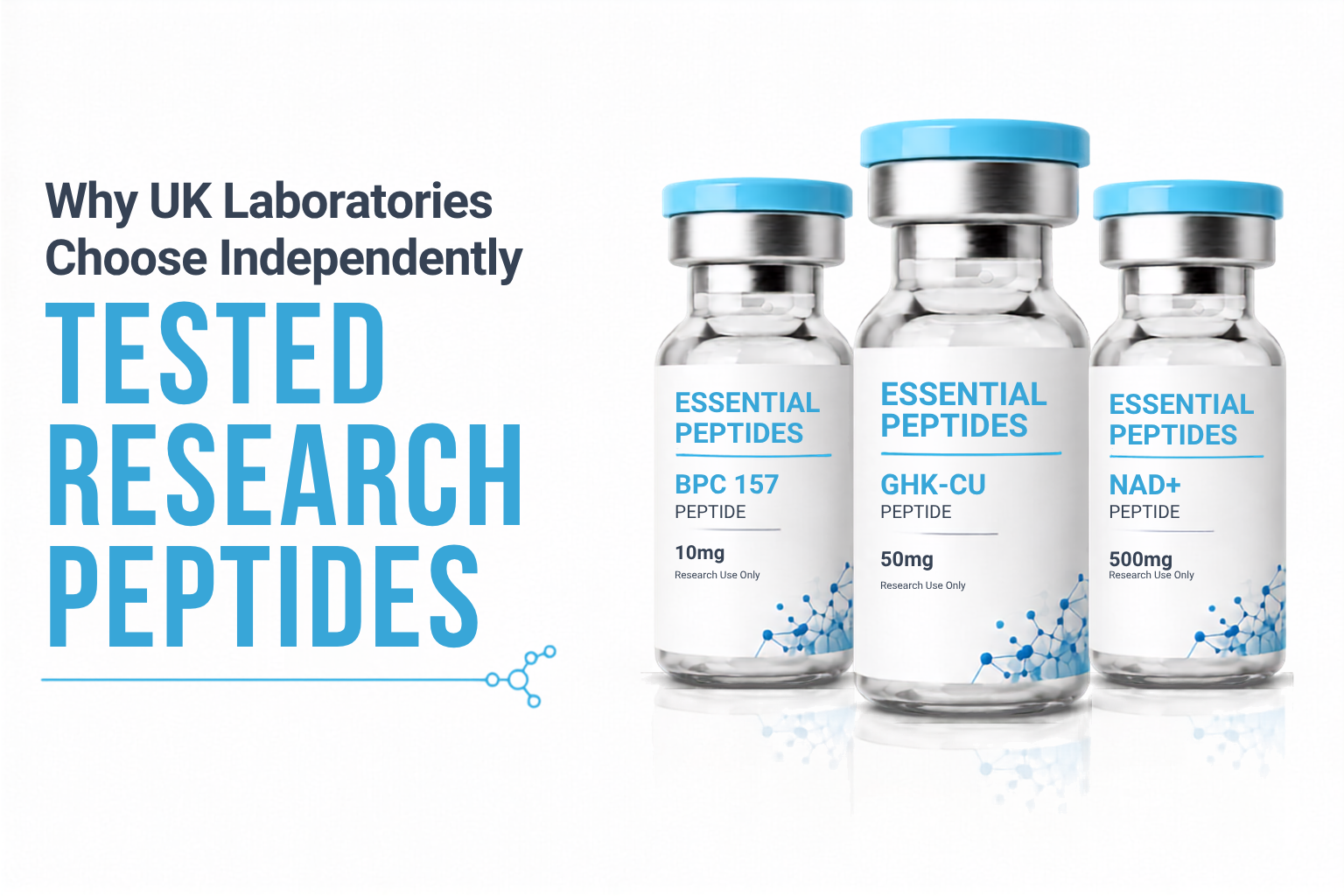
Research integrity depends on the quality of the materials used at every stage of an experiment. When a laboratory sources a peptide, the compound must correspond precisely to its stated specification. This is why independently tested peptides have become the standard expectation rather than an optional extra across the UK research community.
We have seen this shift take shape gradually. Laboratories are no longer satisfied with general assurances of quality. They require documented evidence that a product has been verified by a party with no commercial interest in the outcome.
What Independent Testing Involves
Independent testing refers to a verification process carried out by a laboratory unconnected to the seller. The supplier does not evaluate its own stock. A separate analytical facility examines the sample and reports its findings without commercial influence.
This distinction is significant for several reasons:
- Objectivity: An external laboratory has no incentive to present favorable results.
- Accountability: Findings are documented and can be reviewed if questions arise later.
- Consistency: Verification methods, such as high-performance liquid chromatography (HPLC), follow established analytical standards.
A product described only as “tested” without reference to an external laboratory offers limited assurance. A product supported by a named laboratory and a corresponding certificate provides verifiable evidence instead.
The Role of Purity Data in Research Outcomes
Peptide structure is sensitive to variation. Minor inconsistencies introduced during synthesis or storage can influence how a compound behaves within a research model. This is one reason research-grade peptides UK laboratories select typically include detailed purity documentation rather than a general quality statement.
Purity data serves several practical purposes within a research setting:
- It confirms that the molecular structure matches the intended sequence.
- It identifies the presence of contaminants that could affect results.
- It supports reproducibility across separate research trials.
- It provides a documented reference point for internal review or compliance requirements.
Reproducibility remains central to credible research. A compound that performs inconsistently between batches introduces an unaccounted variable into the research process, which can compromise the reliability of any conclusions drawn from it.
Risks Associated With Unverified Sourcing
Peptides obtained without independent verification carry risks that are not always immediately apparent. A batch may appear satisfactory upon receipt, yet still contain inconsistencies that only become evident once testing or analysis begins.
Commonly reported issues linked to unverified sourcing include:
- Variation in concentration between vials from the same production batch
- Presence of trace contaminants affecting experimental accuracy
- Degradation resulting from inadequate storage or handling prior to dispatch
- Discrepancies between the labeled sequence and the actual compound supplied
These issues are rarely visible through physical inspection alone. Proper documentation, rather than appearance, is what allows researchers to confirm a product’s suitability for use.
How Reputable Suppliers Are Adapting
The demand for verified sourcing has influenced how suppliers operate across the UK market. A dependable peptide supplier UK researchers can rely on typically demonstrates the following practices:
- Engagement with named, recognized testing laboratories rather than undisclosed internal assessments
- Provision of certificates of analysis corresponding to specific batches
- Appropriate storage conditions maintained throughout handling and dispatch
- Transparent communication regarding testing frequency and methodology
These practices are not intended as promotional statements. They represent verifiable commitments that researchers can independently confirm before placing an order.
It should also be noted that some suppliers continue to use general terms such as “laboratory tested” without identifying the testing body or the method applied. This absence of detail is worth examining closely before selecting a supplier.
Evaluating a Supplier Before Purchase
Selecting a supplier involves more than comparing price or delivery timeframes, although both remain relevant considerations. The primary factor should be whether the product can be verified at a molecular level.
Before placing an order, researchers are advised to confirm the following:
- Whether the testing laboratory is clearly identified
- Whether the certificate of analysis corresponds to the specific batch being purchased
- Whether the purity percentage is stated explicitly rather than described in general terms
- Whether storage and handling conditions are specified on the product listing
A supplier confident in its sourcing and testing procedures will typically make this information readily accessible. Its absence may indicate a gap in transparency that warrants further inquiry.
Broader Implications for Research Credibility
Verified sourcing affects more than the outcome of a single experiment. It has a direct bearing on the credibility of the research produced from that material.
Findings derived from unverified compounds are more difficult to defend, publish, or replicate. Once the underlying material is in question, every subsequent stage of the research becomes subject to doubt.
lab tested peptides uk researchers depend on provide a stable foundation from which scientific inquiry can proceed. This allows attention to remain on the research question itself, rather than on uncertainties surrounding the materials used to investigate it.
Documentation Beyond the Certificate of Analysis
A certificate of analysis confirms purity, but it is not the only document a research laboratory should expect from a supplier. Import compliance, shipping records, and product handling notes all contribute to a complete audit trail.
We consider this supporting documentation just as important as the testing results themselves. Laboratories operating under institutional oversight or funding conditions often need to demonstrate that every material used was sourced through a traceable process. A supplier that can readily provide invoices, batch references, and confirmation of the compound’s intended research classification makes this process considerably easier.
Building Confidence Through Consistent Supplier Relationships
Verification at the point of purchase is valuable, but it works best as part of an ongoing relationship rather than a one-time check. Laboratories that source repeatedly from the same supplier benefit from a growing body of evidence about that supplier’s reliability across multiple batches and time periods.
Consistency observed over several orders tells a researcher more than a single certificate ever could. If purity levels, packaging standards, and documentation practices remain stable across repeated purchases, that pattern itself becomes a form of verification. It reduces the need to re-evaluate a supplier from scratch every time a new order is placed.
Conclusion
Independent verification is not a supplementary feature. It represents the foundation upon which reliable research is conducted.
UK laboratories that prioritize independently tested compounds are safeguarding their time, their resources, and the integrity of their published findings. This approach reflects the direction in which responsible research procurement is moving.
Essential Peptides supports this standard through consistent sourcing practices and transparent documentation, giving researchers confidence in the materials they use.
Frequently Asked Questions
1. What does independent testing confirm about a peptide?
Independent testing confirms that a laboratory unconnected to the seller has verified the compound’s identity and purity, providing documented evidence rather than an unsupported claim.
2. How can a researcher confirm a supplier’s testing claims are accurate?
Requesting the certificate of analysis linked to the specific batch, along with the name of the testing laboratory, allows the claim to be independently verified.
3. Why does purity matter when selecting research grade peptides UK suppliers offer?
Purity directly influences experimental accuracy. Even minor structural inconsistencies can alter outcomes, affecting the reliability and reproducibility of research findings.
4. Does the choice of supplier affect the consistency of research results?
It does. A supplier with verified, batch-specific testing reduces variability between orders, supporting more consistent and reproducible outcomes across research projects.