The History of BPC-157: From Gastric Discovery to Modern Research
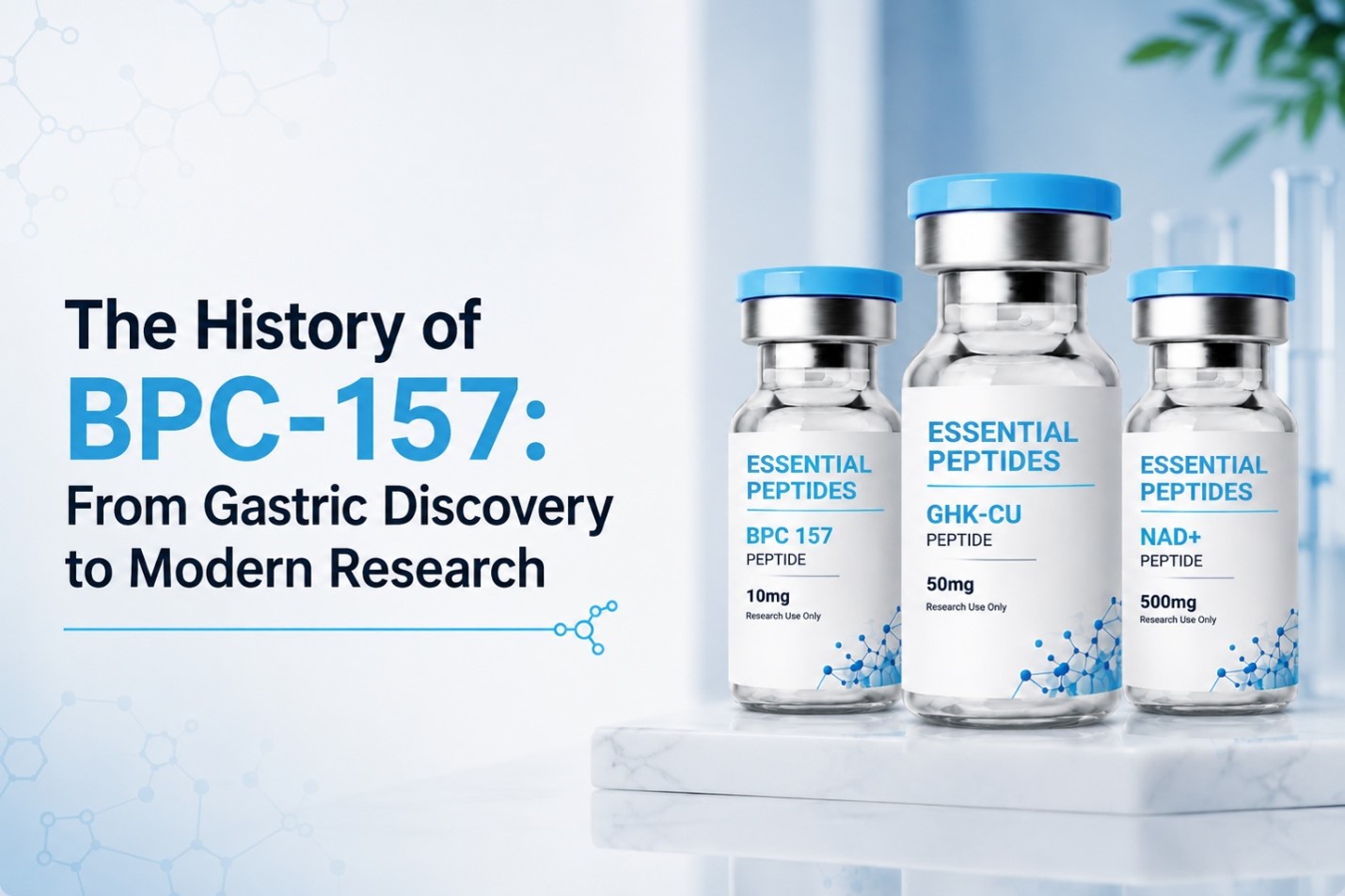
Peptide science has produced several compounds of significant research interest, and BPC-157 remains one of the most extensively documented. Its origin lies not in a conventional laboratory synthesis program but in the study of protective mechanisms within the human digestive system. This foundation eventually established bpc 157 research peptide.
This blog examines the discovery of BPC-157, the scientific developments that followed, and the current position of this compound within contemporary research.
What Is BPC-157?
BPC-157, an abbreviation of Body Protection Compound-157, is a synthetic peptide composed of 15 amino acids. It was derived from a protein sequence identified within human gastric juice.
Several defining characteristics distinguish this compound:
- It belongs to a class of stable gastric pentadecapeptides.
- Its properties have been studied extensively in relation to tissue-related biological processes.
- It holds no approval for human or veterinary application in any jurisdiction.
- Reputable suppliers market it exclusively as a BPC-157 research peptide, intended for laboratory investigation only.
This distinction is important to establish at the outset. Products marketed under this designation are intended solely for scientific and laboratory research purposes, not for consumption or therapeutic application.
The Gastric Discovery That Initiated Research Interest
Prior to the identification of BPC-157, researchers had already directed considerable attention toward the protective properties of gastric juice. The stomach represents a biologically demanding environment, subject to constant acidic and enzymatic stress, yet it demonstrates a notable capacity for rapid tissue repair.
This resilience became a focal point of investigation during the 1990s. Croatian research teams, engaged in extensive study of gastrointestinal protective mechanisms, undertook efforts to isolate specific compounds present within gastric juice responsible for this durability.
This work led to the identification of BPC-157, a stable peptide fragment associated with the stomach’s natural protective functions. The compound’s subsequent significance within peptide research exceeded initial expectations at the time of its identification.
Why the Digestive System Provided the Initial Research Focus
The gastrointestinal tract is subject to continuous minor tissue stress, arising from acid exposure, enzymatic activity, and mechanical friction. Researchers sought to understand the biological mechanisms allowing the stomach lining to recover more rapidly than other tissue types.
BPC-157 emerged directly from this line of investigation, which explains why early research concentrated primarily on gastrointestinal models before expanding into other research domains.
Expansion of Early Research
Following its isolation and characterization, scientific interest in BPC-157 extended beyond gastrointestinal applications relatively quickly. Researchers began examining the peptide across a broader range of biological models to determine whether its protective properties applied to additional tissue systems.
Notable directions taken by early research include the following:
- Tissue models – examining cellular and structural responses following exposure to the peptide.
- Vascular studies – investigating processes related to blood vessel formation and circulatory function.
- Musculoskeletal research – studying tendons, ligaments, and connective tissue within controlled laboratory settings.
- Neurological pathways – exploring potential interactions with nerve-related signaling mechanisms.
None of this research has resulted in approved medical treatments. All findings remain confined to laboratory and preclinical research settings. However, the breadth of scientific interest positions BPC-157 among the more extensively studied laboratory research peptides available today.
Factors Behind Sustained Scientific Interest
Several characteristics have contributed to continued research attention toward BPC-157 following its initial identification.
- Stability. Unlike many peptides that degrade rapidly under standard conditions, BPC-157 demonstrates notable stability within gastric acid, facilitating its use in experimental research.
- Broad applicability. Its observed effects are not confined to a single tissue type, which has supported investigation across multiple biological systems.
- Consistent findings. Repeated laboratory studies have produced results that support continued research rather than discontinuing further investigation.
Peptide research as a discipline has expanded considerably over the past two decades, and BPC-157 has remained a consistent point of reference throughout this growth. Academic interest in amino acid chains, cellular signaling, and tissue repair mechanisms has increased across universities and independent laboratories, with BPC-157 frequently cited within this body of literature.
BPC-157 Within UK Research Contexts
Interest inBPC-157 UK research has developed alongside the compound’s international profile. UK-based laboratories, universities, and independent researchers increasingly reference BPC-157 within peptide-related studies, supported by access to lab-tested supply and an established body of published research.
Several factors have contributed to continued UK research engagement with this compound:
- A well-documented research history extending over two decades.
- Wide availability of published literature supporting further investigation.
- Established sourcing channels through research peptides suppliers providing purity documentation.
Sourcing quality plays a substantial role in this context. Researchers depend on consistent, verifiable material to obtain reliable experimental outcomes, a requirement that has shaped the development of the UK peptide supply market in recent years.
The Current Position of Modern Research
Current investigation into BPC-157 remains active, though certain boundaries within the existing literature warrant clarification. A substantial proportion of available research derives from laboratory and animal-model studies rather than large-scale human clinical trials. This distinction remains essential for anyone reviewing published findings.
Areas of continued focus within modern research include:
- Cellular repair mechanisms at a molecular level.
- Interaction with growth factor signaling pathways.
- Comparative analysis against other peptides within similar research categories.
- Long-term stability and storage behavior under controlled laboratory conditions.
Researchers continue to publish findings regularly, and the compound remains a consistent subject within peptide science literature, academic conferences, and ongoing laboratory investigation. Its progression from a gastric-derived protein fragment to a widely referenced research subject illustrates the substantial growth this field has undergone since its identification in the 1990s.
The Importance of Reliable Sourcing
Researchers working with BPC-157 within laboratory settings recognize that experimental outcomes depend directly on the reliability of the material under study. Purity, batch consistency, and appropriate storage conditions all influence research results.
Considerations relevant to sourcing include:
- Independent laboratory testing and accompanying purity documentation.
- Clear research-use-only labeling in accordance with regulatory expectations.
- Appropriate storage and handling guidance provided by the supplier.
- Transparent batch-specific information where available.
These factors distinguish a dependable supplier from one offering limited documentation or verification.
Conclusion
The progression of BPC-157 from a gastric-derived discovery to a widely studied research peptide reflects the depth of scientific inquiry this compound has generated. What began as an investigation into gastric protective mechanisms has developed into decades of laboratory research spanning multiple biological systems.
For researchers engaging with this compound, understanding its history provides valuable context for interpreting current findings. At Essential Peptides, we supply lab-tested research peptides, including BPC-157, to support UK researchers who require consistent and well-documented material for their scientific work.
Frequently Asked Questions
1. What was BPC-157 originally derived from?
BPC-157 was originally isolated from a protective protein identified within human gastric juice during research conducted in the 1990s.
2. Is BPC-157 approved for human use in the UK?
No. BPC-157 holds no approval for human or veterinary use in the UK. It is supplied and studied exclusively as a research peptide.
3. Why is BPC-157 considered more stable than many other peptides?
Its molecular structure allows it to remain stable under gastric acid conditions, making it comparatively easier to handle and study within laboratory environments.
4. Where can UK researchers obtain lab-tested BPC-157?
UK researchers typically source BPC-157 through specialist suppliers offering independently lab-tested research peptides, supported by clear purity documentation and appropriate research-use labelling.