Cold Chain and Shipping: How Reputable UK Peptide Suppliers Protect Product Integrity
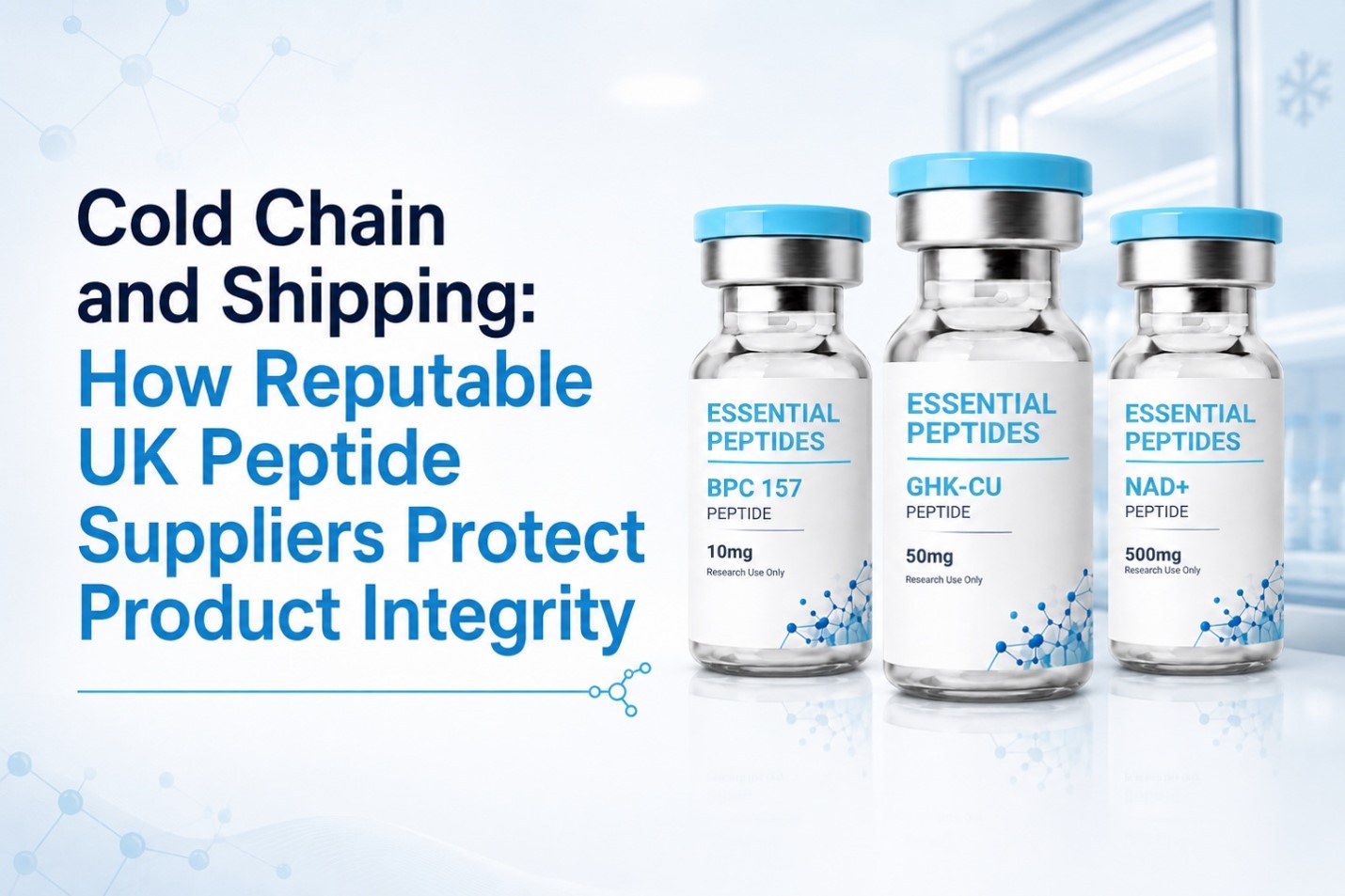
Peptides break down quietly. There is no obvious sign when a vial has spent too long in a hot delivery van, no smell or discoloration to warn you. The purity simply drops, and the researcher only finds out once results stop making sense. That is why shipping practice matters just as much as what happens in the lab, and it is a core part of what a serious research peptide supplier UK should get right from day one.
We handle every order with this in mind, from storage through to the moment it reaches your door.
Why Peptides Are Sensitive to Heat and Time
Peptides are chains of amino acids held together by bonds that respond badly to warmth, moisture, and prolonged exposure. A short spell at room temperature is usually fine. Days sitting in a warm warehouse or a delayed parcel is a different matter entirely.
What Degradation Actually Looks Like
Heat exposure does not always change how a product looks. What it changes is what is inside:
- Purity levels drop below the tested batch result
- The molecular structure becomes less stable
- Reconstituted material loses potency faster than expected
A vial can appear completely normal and still no longer match its Certificate of Analysis.
Lyophilized vs Reconstituted Peptides
Freeze-dried, or lyophilized, peptides are more resilient during transit than reconstituted ones. Even so, they still need to be stored below minus 20°C once they arrive, while reconstituted vials should go straight into a fridge and be used within their recommended window. Storage habits do not stop once the parcel is delivered.
What Proper Cold Chain Handling Involves
A reliable cold chain is not one action. It is a sequence, and it only works if every stage holds up.
Storage Before Dispatch
Peptides should sit in monitored, temperature-controlled storage right up until an order is packed. Skipping this step, even for a short period, adds risk that testing alone cannot undo later.
Packaging Built for the Journey
Insulated packaging is what keeps internal temperature stable once a parcel leaves the warehouse. This should be standard practice, not a feature suppliers charge extra for or mention only when asked.
Speed Reduces Risk
The shorter the time in transit, the less pressure on the packaging. Orders placed before a clear cut-off time, dispatched the same working day, and shipped with tracking, reduce the window where things can go wrong. We dispatch same-day on orders placed before 2 pm, with tracked delivery across the UK and internationally, packed discreetly for privacy.
How to Recognize a Trustworthy Peptide Supplier UK Researchers Can Rely On
Cold chain discipline is not always visible from a product page, but a few details usually give it away. A genuine peptide company UK researchers can depend on tends to be upfront about the following:
- Storage instructions stated clearly, including temperature requirements after delivery
- Dispatch timing, so you know how long material sits before it ships
- Tracked delivery, removing uncertainty about where a parcel is
- Independent testing, confirmed through a Certificate of Analysis
- Direct support access, in case something about an order needs clarifying
Suppliers who are willing to share this information, rather than making you dig for it, are usually the ones taking the process seriously.
Why Lab Testing and Shipping Have to Work Together
Testing confirms what a peptide is at the point of analysis. Shipping determines whether that result still holds by the time it reaches you. One without the other leaves a gap.
Lab-tested peptides UK suppliers offer should come with batch-specific testing, not a single result applied across an entire product line. Every batch we release is independently tested, and a Certificate of Analysis is available on request, usually returned within one working day. That documentation only means something, though, if the product has been stored and shipped in a way that protects the result it describes.
Shipping Mistakes That Undermine Product Quality
Some suppliers get testing right but fall short on logistics. The most common gaps include:
- Standard packaging used instead of insulated shipping
- Orders dispatched late in the week and left sitting over a weekend
- No tracking, meaning delays go unnoticed until the parcel finally arrives
- Storage instructions missing from product pages entirely
- Support that is hard to reach when a question comes up mid-order
Any single issue on this list can affect one order. Several of them together tend to point to a bigger problem with how a supplier operates.
What This Means for Wholesale and Bulk Orders
Cold chain requirements do not ease up for larger orders. If anything, they matter more, since bulk shipments often involve more handling and longer logistics chains. A dependable supplier maintains the same storage and dispatch standards whether an order is a single vial or a bulk quantity for a laboratory, clinic, or distributor, with clear communication throughout.
International Shipping and Cold Chain Consistency
Shipping across borders adds another layer of difficulty to temperature control. Customs delays, longer transit routes, and unpredictable handling at different checkpoints all increase the time a parcel spends outside a controlled environment. A dependable research peptide supplier accounts for this by using packaging rated for extended transit, not just the minimum needed for a next-day domestic delivery.
We ship worldwide with the same tracked, insulated approach used for UK orders, adjusted where needed for longer journeys. Researchers ordering internationally should still expect clear tracking information and realistic delivery estimates, rather than vague timeframes that leave a parcel sitting in transit longer than necessary.
The Right Vial and Packaging Materials Matter Too
Cold chain handling protects temperature, but the container itself plays a role in product stability as well. Type 1 glass vials, for example, resist chemical interaction with the contents far better than lower-grade glass, reducing the risk of contamination or breakdown over time. Packaging materials used around the vial also matter, since cheap padding can shift during transit and leave items exposed to knocks or pressure.
A lab tested peptides UK supplier that pays attention to this level of detail is usually applying the same care throughout the rest of its process. Vial quality is easy to overlook, but it sits right alongside temperature control as a factor that determines whether a product arrives exactly as tested.
Conclusion
Reliable shipping is not a finishing touch. It is what protects everything that came before it, from sourcing through to lab testing. A peptide supplier UK researchers can trust treats temperature control, packaging, and dispatch speed as fixed standards rather than optional extras. At Essential Peptides, every order is stored, packed, and dispatched with that same level of care, because a tested result only matters if it still holds when the product arrives.
Frequently Asked Questions
1. Why is cold chain shipping important for peptides?
Peptides degrade when exposed to heat over time, which can lower purity and affect research outcomes. Cold chain shipping keeps temperature stable from storage through to delivery.
2. How do I know if a research peptide supplier follows proper storage practices?
Look for clear storage instructions on the product page, insulated packaging, tracked delivery, and access to a Certificate of Analysis for each batch.
3. Are lab tested peptides UK suppliers sell always accurately labelled?
Testing at the point of release confirms purity and identity, but ongoing accuracy also depends on how the product is stored and shipped after that testing takes place.
4. What should I check before choosing a peptide company UK based to order from?
Confirm they offer UK-based storage, documented dispatch timing, tracked shipping, and batch-specific lab testing before placing an order.