How Are Research Peptides Tested? Purity, HPLC & Certificates of Analysis
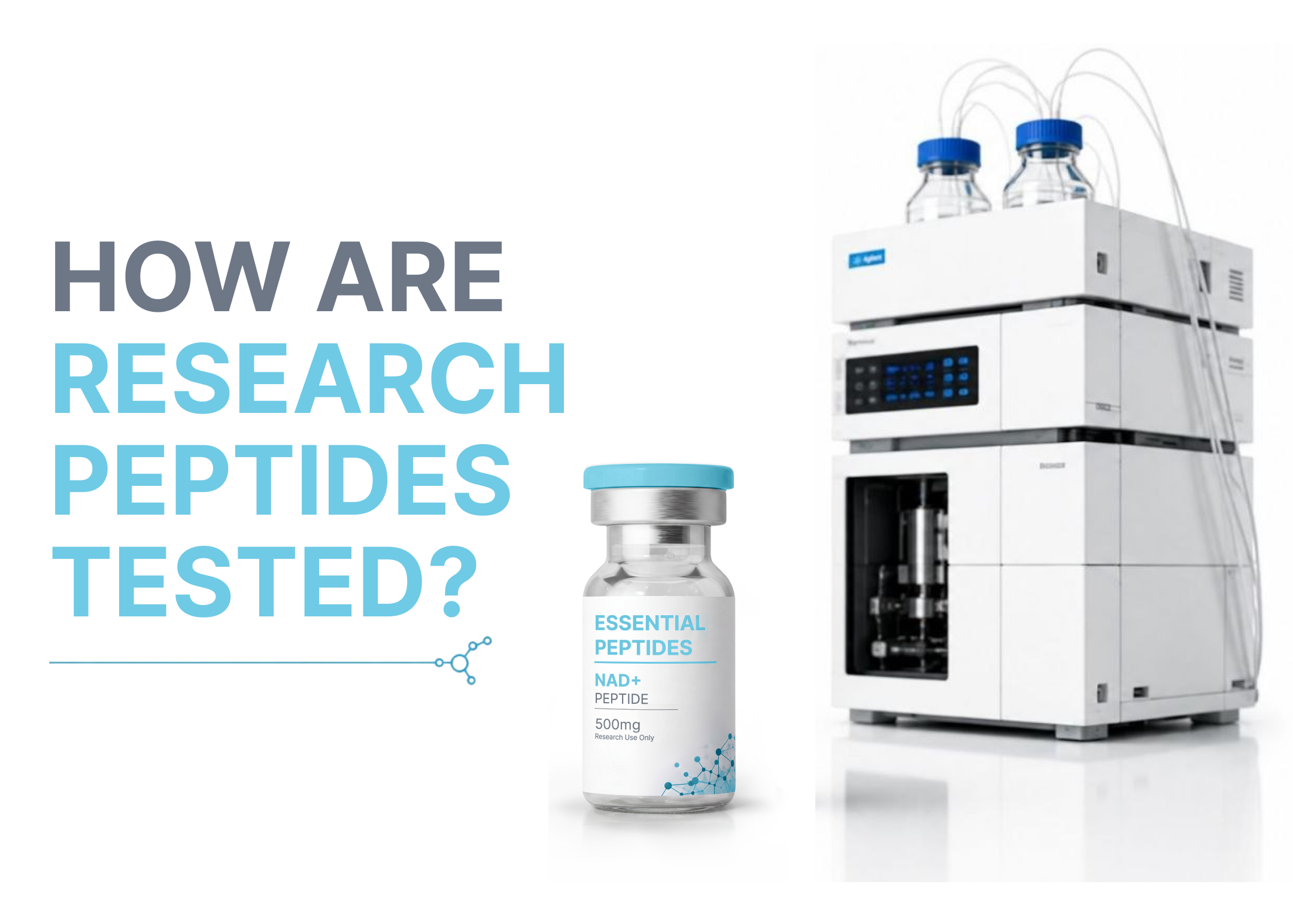
Lab tested peptides are assessed using analytical methods designed to evaluate their identity, purity and composition. For researchers, understanding how these materials are tested can help when evaluating the quality and documentation supplied with a peptide.
Laboratory testing may involve several analytical techniques, with methods such as High-Performance Liquid Chromatography (HPLC) commonly used to assess peptide purity. Other techniques can be used to help confirm molecular identity and provide additional information about a sample.
This guide explains how research peptides are tested, what peptide purity percentages mean, how HPLC testing works and what to look for when reviewing a Certificate of Analysis.
Why Are Research Peptides Tested?
Research peptides are produced through controlled synthesis processes. Once produced, analytical testing can be used to assess whether the resulting material meets its stated specifications.
Testing can provide researchers with information about characteristics such as identity and purity while helping identify unwanted components or impurities within a sample.
The exact testing performed can vary depending on the peptide, laboratory and intended research application. For this reason, analytical documentation can be an important part of evaluating research materials.
What Does Peptide Purity Mean?
Peptide purity generally refers to the proportion of the analysed peptide sample attributed to the desired peptide relative to detectable impurities under the analytical method used.
A reported purity figure should therefore be considered alongside the testing method and supporting analytical data rather than viewed as a complete assessment of quality on its own.
For example, a stated purity of 99% does not by itself provide every piece of information about a peptide. Researchers may also consider identity testing, batch information, storage conditions and the analytical documentation available for the material.
What Is HPLC Peptide Testing?
High-Performance Liquid Chromatography, commonly abbreviated to HPLC, is an analytical technique frequently used when assessing peptide purity.
During HPLC analysis, components within a sample are separated based on how they interact with the chromatography system. The resulting chromatogram displays peaks corresponding to components detected during the analysis.
The main peptide component will typically produce a prominent peak, while additional peaks may indicate other detectable components. Analysis of this data can then be used to estimate the purity of the peptide sample.
Is HPLC the Same as Identity Testing?
No. Purity and identity are related but separate considerations.
HPLC is commonly used to evaluate purity and separation characteristics, but additional analytical methods may be used to provide evidence about the molecular identity of a peptide.
Mass spectrometry, for example, can measure the mass-to-charge ratio of ions within a sample and can help determine whether analytical results are consistent with the expected molecular mass of a peptide.
Using complementary analytical methods can therefore provide more information than relying on a purity percentage alone.
What Is a Certificate of Analysis?
A Certificate of Analysis (COA) is a document containing analytical or specification information relating to a particular material or batch.
Depending on the supplier and testing performed, a peptide COA may include information such as the product or peptide name, batch or lot number, stated purity, analytical method, test results and testing date.
Researchers reviewing a COA should consider whether the documentation can be connected to the specific product or batch being supplied.
Why Is Batch Traceability Important?
Batch traceability helps connect a research material with the records and analytical information associated with its production or testing.
Rather than relying solely on a general purity claim, batch-specific documentation can provide researchers with more relevant information about the particular material they are evaluating.
Clear product identification, batch references and accessible analytical documentation all contribute to greater transparency.
How to Evaluate Lab Tested Peptides
When assessing lab tested peptides, researchers can consider more than a single purity percentage.
Useful factors include whether the peptide is clearly identified, whether batch information is provided, which analytical methods were used, whether supporting documentation is available and whether the reported results correspond with the material being supplied.
Storage and handling information should also be considered because appropriate conditions can be important for maintaining research materials.
Research Peptides at Essential Peptides
Essential Peptides supplies research peptides and associated laboratory products intended for research purposes.
Our focus is on product identification, batch traceability and independent laboratory verification, with testing information made available for relevant products and batches.
Researchers can explore our current range of research products through the Essential Peptides shop.
For a broader introduction to the subject, read our guide to what research peptides are and how they are studied.
Research Use Only
Products supplied by Essential Peptides are intended strictly for laboratory and scientific research purposes.
They are not medicines, supplements or food products and are not intended for human consumption or for the diagnosis, treatment or prevention of any medical condition.