Peptide Storage: How Research Peptides Should Be Stored in the Laboratory
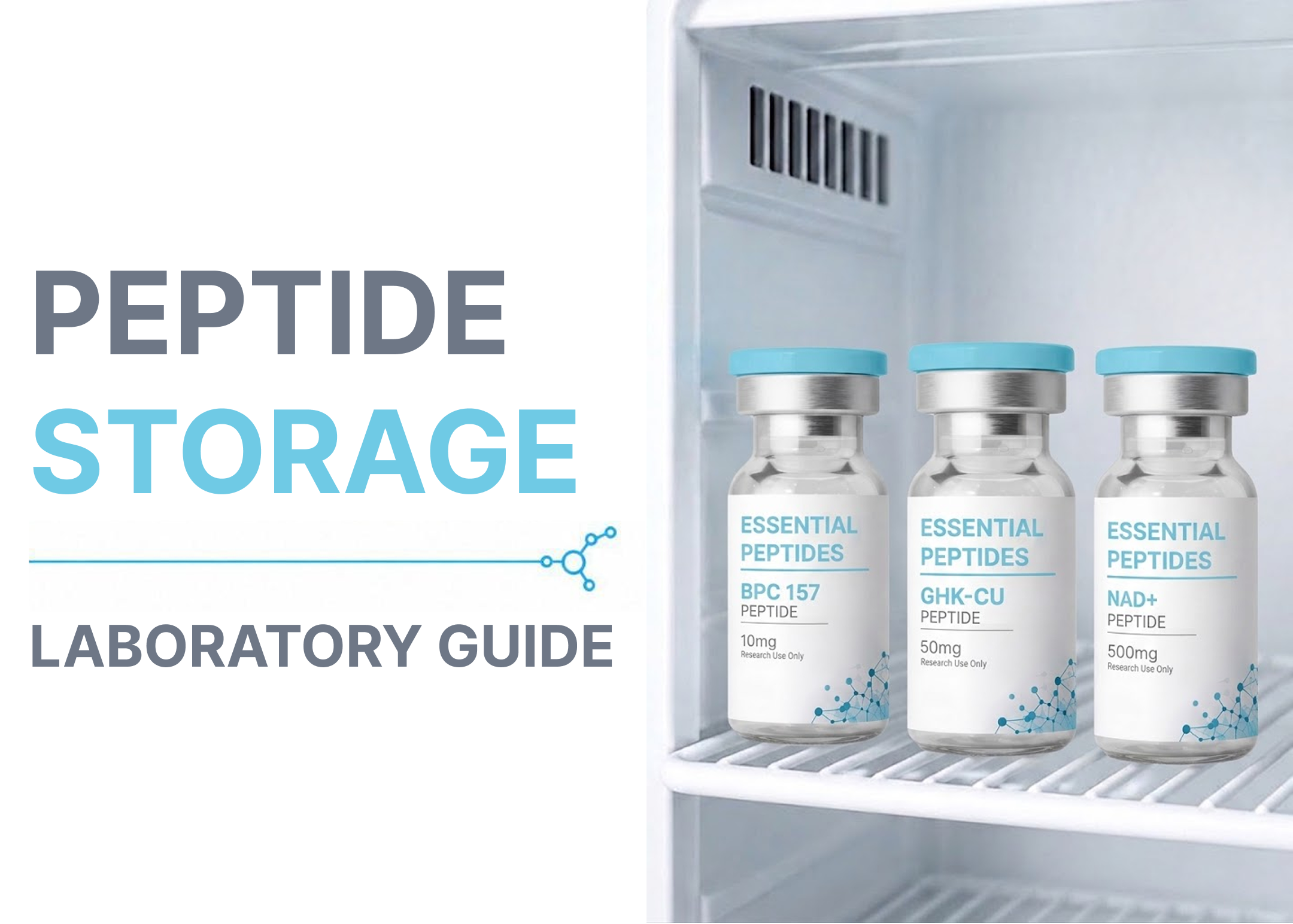
Peptide Storage: How Research Peptides Should Be Stored in the Laboratory
Peptide storage is an important consideration when handling peptide materials in a laboratory environment. Appropriate storage conditions can help protect research materials from environmental factors that may affect their stability or integrity over time.
Temperature, light, moisture and handling conditions can all be relevant depending on the particular peptide and its physical form.
This guide explains the main factors researchers should consider when storing peptides for laboratory research.
Why Is Peptide Storage Important?
Research peptides are chemical materials that can be affected by their surrounding environment.
Depending on the peptide, exposure to unsuitable temperatures, moisture, light or repeated changes in storage conditions may affect the material over time.
For this reason, researchers should follow the storage information supplied with the specific peptide rather than assuming that every peptide requires identical conditions.
What Temperature Should Research Peptides Be Stored At?
There is no single storage temperature appropriate for every research peptide.
Recommended conditions can vary depending on the peptide sequence, formulation, physical form and intended storage period.
Researchers should therefore refer to the product-specific documentation, manufacturer information or relevant analytical guidance for the material being handled.
Where a particular temperature range is specified, laboratory storage equipment should be capable of maintaining the required conditions consistently.
For a broader guide to evaluating peptide quality and documentation, read our guide to choosing research grade peptides.
Lyophilised Peptide Storage
Many research peptides are supplied in a lyophilised, or freeze-dried, form.
Lyophilisation removes water from a material under controlled conditions and can improve the practicality of storing and transporting certain peptide materials.
However, being lyophilised does not mean that a peptide is unaffected by environmental conditions.
The storage requirements provided for the individual material should still be followed.
Protecting Peptides From Light
Light exposure can be an important consideration for some laboratory materials.
Where a peptide is identified as light-sensitive, appropriate containers or controlled storage conditions may be used to reduce unnecessary exposure.
Researchers should check the documentation supplied with the peptide to determine whether protection from light is recommended.
Moisture and Peptide Storage
Moisture is another environmental factor that may influence some peptide materials.
Lyophilised products in particular should be kept in appropriately sealed containers according to their specified storage requirements.
Good laboratory storage practices can help reduce unnecessary exposure to humidity and other environmental conditions.
Avoiding Unnecessary Temperature Changes
Repeated movement between different storage environments can expose research materials to fluctuations in temperature and environmental conditions.
Where practical, peptides should remain under their specified storage conditions until required for laboratory work.
Laboratories may also maintain appropriate records of storage conditions where this is relevant to their research procedures.
Peptide Labelling and Batch Traceability
Storage is also closely connected with good laboratory organisation.
Peptide materials should remain clearly identifiable while stored. Product names, batch or lot numbers and other relevant identifiers can help researchers connect a stored material with its associated documentation.
Maintaining this information can also help preserve batch traceability throughout the research process.
Always Follow Product-Specific Storage Information
General information about peptide storage should not replace the instructions supplied for an individual research material.
Different peptides may have different stability characteristics and storage requirements.
Researchers should therefore review the documentation associated with the specific product or batch and follow the applicable laboratory storage guidance.
Research Peptides at Essential Peptides
Essential Peptides supplies peptide materials intended for laboratory and scientific research.
Product information and relevant documentation are provided to help researchers identify, store and manage research materials appropriately.
Researchers can explore the available range through the Essential Peptides shop.
Research Use Only
Products supplied by Essential Peptides are intended strictly for laboratory and scientific research purposes.
They are not medicines, supplements or food products and are not intended for human consumption or for the diagnosis, treatment or prevention of any medical condition.