Proper Storage and Handling of Research Peptides: A Laboratory Guide
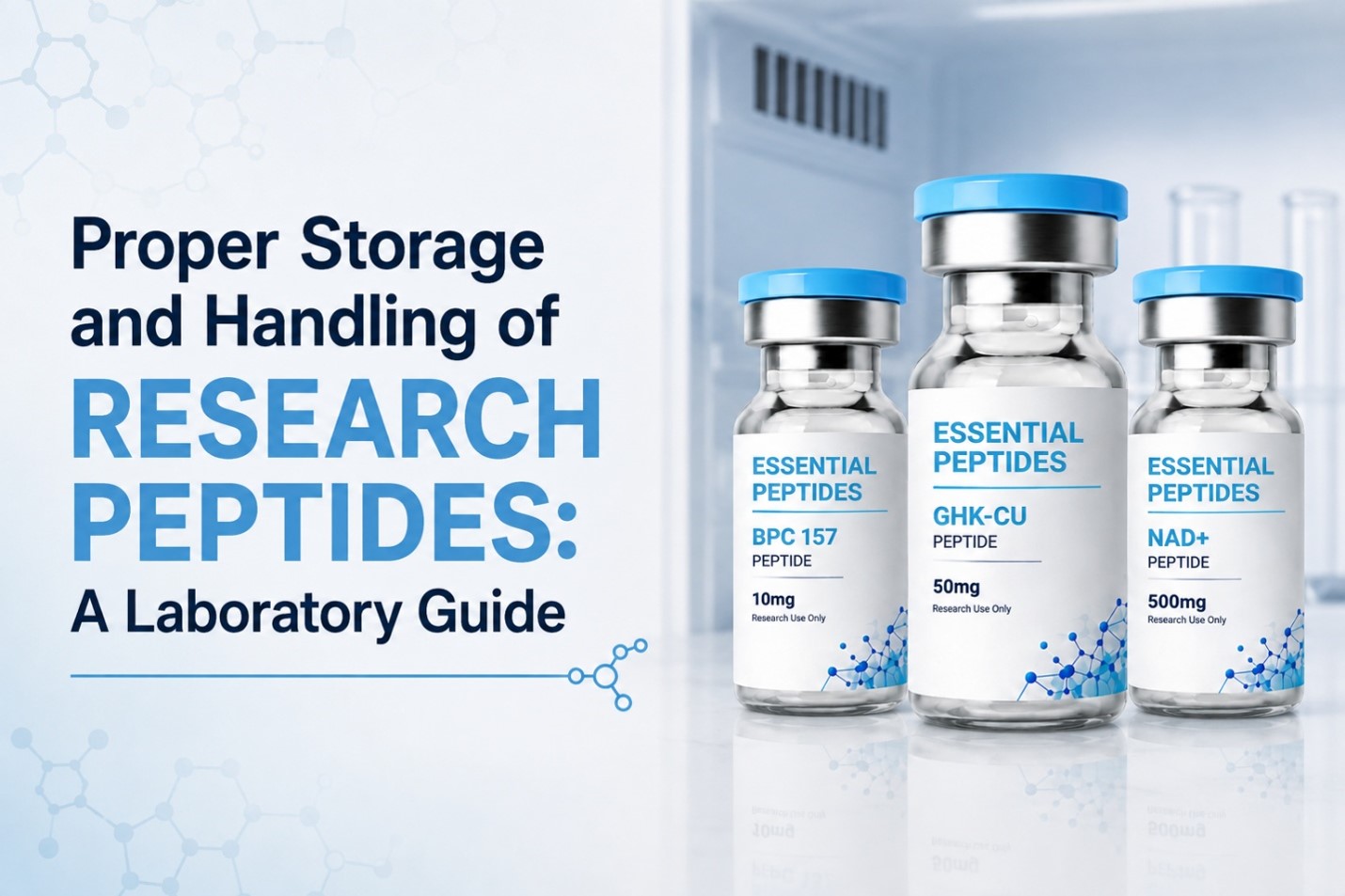
Working with laboratory research peptides requires more than careful measurement and accurate documentation. Storage conditions play a direct role in whether a peptide sample remains stable, pure, and usable for the duration of a study. A single lapse in temperature control or handling can compromise weeks of preparation.
We put together this blog to help researchers understand the practical side of peptide storage, from the moment a vial arrives to the point it is reconstituted and used in the lab.
Why Storage Conditions Matter for Peptide Integrity
Peptides are delicate molecules. Their structure can degrade quickly when exposed to conditions outside their recommended range. Understanding these vulnerabilities is the first step toward reliable results.
Temperature Sensitivity
Most peptides are supplied in lyophilized (freeze-dried) form. This form is stable at cooler temperatures, but it is not indestructible. Repeated exposure to warmth, even for short periods, can accelerate breakdown.
We recommend keeping lyophilized vials below -20°C wherever possible. A standard laboratory freezer works well for this purpose, provided the temperature remains consistent.
Light and Moisture Exposure
Peptides are also sensitive to light and humidity. Both factors can trigger oxidation or hydrolysis, altering the molecular structure over time.
Original packaging is usually designed with this in mind. Keeping vials in their supplied containers, away from direct sunlight, adds an extra layer of protection.
Storing Lyophilized Peptides Correctly
Before reconstitution, peptides remain in their most stable state. Even so, a few handling habits make a measurable difference to shelf life.
- Store vials upright in a dedicated freezer section, separate from food or general lab samples
- Avoid placing vials near the freezer door, where temperature fluctuates most
- Label each vial clearly with batch number and date received
- Limit how often a vial is removed and returned to storage, as temperature cycling weakens stability
- Keep desiccant packets in storage boxes if provided, to manage residual moisture
Following these steps helps preserve the purity that research grade peptides UK suppliers test and certify before dispatch.
Reconstitution: Using Bacteriostatic Water UK Researchers Trust
Reconstitution is the point where careful technique matters most. This is the process of dissolving the lyophilized peptide into a liquid form, ready for measured use.
Most researchers use bacteriostatic water UK labs commonly rely on, rather than plain sterile water. Bacteriostatic water contains a small percentage of benzyl alcohol, which helps inhibit bacterial growth during the vial’s usable life once opened.
A few practical tips make this step smoother:
- Allow both the peptide vial and the bacteriostatic water to reach room temperature before mixing.
- Insert the needle at an angle and let the water run gently down the inside wall of the vial rather than injecting it directly onto the powder.
- Swirl the vial gently rather than shaking it, since vigorous shaking can damage the peptide structure.
- Check that the solution appears clear, without visible particles, before proceeding.
- Record the reconstitution date on the vial label for tracking purposes.
Rushed or forceful reconstitution is one of the more common reasons peptide samples underperform in later testing stages.
Handling Reconstituted Peptides
Once a peptide has been reconstituted, its storage requirements change. It is no longer in a stable dried state, and the countdown on its usable shelf life begins.
Refrigeration, Not Freezing
Reconstituted peptides should be kept in a refrigerator, generally between 2°C and 8°C. Freezing a reconstituted solution and thawing it repeatedly can cause the peptide to break down faster than expected.
Usage Window
Most reconstituted peptides remain stable for a limited number of weeks under refrigeration. This window varies depending on the specific peptide sequence, so checking supplier documentation for each product is good practice.
Avoiding Contamination
Every time a vial is accessed, there is a small risk of introducing contaminants. Using a fresh needle for each draw and wiping the vial stopper with an alcohol swab beforehand reduces this risk considerably.
Choosing Lab-Tested Peptides From a Reliable Source
Storage practices only matter if the starting material is trustworthy. Sourcing lab tested peptides from a supplier with transparent testing processes gives researchers a stronger foundation to work from.
A few things worth checking before ordering:
- Independent laboratory verification of purity, ideally above 99%
- Availability of a Certificate of Analysis for the specific batch being purchased
- Clear information on how the product has been stored prior to dispatch
- Packaging designed to maintain temperature during transit
These details reduce uncertainty and help researchers focus on their actual study rather than second-guessing the material itself.
Keeping Accurate Storage Records
Documentation is often treated as an afterthought, yet it plays a central role in maintaining the reliability of laboratory research peptides over time. Without clear records, it becomes difficult to track how long a sample has been stored, how many times it has been accessed, or whether conditions have shifted at any point.
A simple logging system, whether digital or on paper, should capture the essentials for each vial. This does not need to be complicated to be effective.
Common Storage Mistakes to Avoid
Even experienced researchers can fall into habits that shorten peptide stability. Watching for these issues helps maintain consistent results across a study.
- Leaving vials at room temperature for extended periods between uses
- Storing peptides alongside strong-smelling chemicals that may affect vial seals
- Forgetting to label reconstitution dates, leading to uncertainty about usable windows
- Using tap water or non-sterile water instead of proper bacteriostatic solutions
- Placing freezer boxes in high-traffic areas where the door opens frequently
Small adjustments to daily lab routines often prevent these problems entirely.
Transporting Peptides Between Lab Locations
Moving peptide samples between rooms, buildings, or facilities introduces its own set of risks. Temperature control does not pause just because a vial is in transit, and many researchers underestimate how quickly a short walk across a car park can affect stability.
A cool box or insulated carrier with ice packs is a practical solution for internal transport. For longer journeys between sites, the same principles that apply to research grade peptides UK suppliers use for shipping should guide internal handling too.
Conclusion
Proper storage is not a minor detail in peptide research. It directly affects sample reliability, study outcomes, and the overall value of the time invested in each experiment. Cold, dark, and undisturbed conditions before reconstitution, followed by refrigeration and careful handling afterward, form the backbone of good laboratory practice.
At Essential Peptides, we understand how much these details matter to researchers who need consistent, dependable results. Sourcing quality material and pairing it with correct storage habits gives every study the best possible starting point.
Frequently Asked Questions
How long can lyophilised research peptides be stored before use?
When kept below -20°C in their original packaging, most lyophilised peptides remain stable for extended periods, often a year or more, though this varies by sequence.
Can bacteriostatic water be reused after opening?
Yes, bacteriostatic water can typically be used for multiple reconstitutions within its stated shelf life, provided it is stored refrigerated and handled with clean technique each time.
Why do research grade peptides need independent lab testing?
Independent testing confirms purity and identity, giving researchers confidence that the compound matches its labelling before it becomes part of a study.
What is the safest way to thaw a frozen peptide vial?
Allowing the vial to reach room temperature gradually, rather than using heat sources, protects the peptide structure and reduces the risk of degradation.